
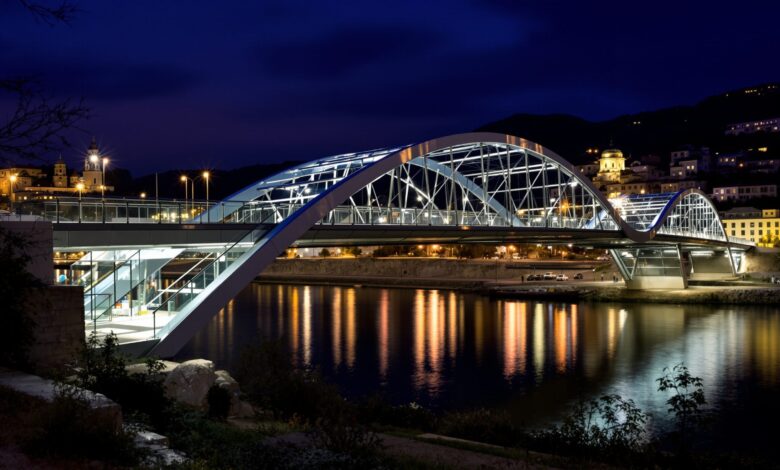
What is Bridge of Peace?
Bridge of Peace is a pedestrian bridge over the Mtkvari River in the centre of Tbilisi, completed in 2010 and characterised by a curvilinear design made of glass and metal, known as a symbol of modern architecture in Tbilisi. It is known as a symbol of modernity in Tbilisi.
The bridge plays an important role in connecting the Old Tbilisi and the newly developed Rike Park area. In Tbilisi, where historic streets and modern architecture coexist, the Bridge of Peace has become a symbolic link between old and new cultures.
The bridge, which is approximately 150 metres long and can be crossed on foot in a few minutes, is an important passageway used on a daily basis by both tourists and locals. From the bridge, visitors can see the flow of the Mutukvari River and the surrounding cityscape, making it an ideal spot to enjoy the Tbilisi landscape.
Background and significance of the bridge's construction.
Bridge of Peace was designed by Italian architect Michele De Lucchi in 2010 and built as part of Tbilisi's urban redevelopment project. At this time, Georgia was undergoing post-independence modernisation, and the capital city of Tbilisi was also focusing on creating a new urban landscape.
The name of the bridge, Bridge of Peace, reflects Georgia's historical background and hopes for the future. Peace has always been an important theme for the country, which has experienced many difficulties in its long history, and this bridge is a symbol of that.
The bridge was also built not only as a mere transport infrastructure, but also as a new landmark in Tbilisi, with the expectation that it would serve as a tourism resource. Indeed, since its completion, it has become a popular destination for many tourists and is recognised as one of the architectural symbols of Tbilisi's image.
Design and architectural features
The most striking feature of the Bridge of Peace is its unique curvilinear design. The entire bridge is made up of a glass and metal frame, giving it a flowing shape that resembles a giant wave. This organic design contrasts with the surrounding historic buildings, yet is strangely harmonious.
The bridge structure incorporates approximately 30,000 LED lights, which are illuminated in different patterns at night. The glass panels are highly transparent and let in natural light during the day, providing an open space for people walking on the bridge. The metal frame is white, giving it a clean and contemporary look.
The bridge is also a very popular photographic location. In particular, photos capturing the curvaceous beauty of the bridge, the view of the old town from the bridge and its illuminated appearance at night are frequently shared on social networking sites. Photographs can be taken from different angles to enjoy the different faces of the bridge.
Different attractions by day and night
The Bridge of Peace is an unusual tourist attraction that looks completely different by day and by night. During the day, the clear glass and white metal frames look clean and modern against the blue sky. From the bridge, you can see the flow of the Mutukvari River, the buildings of the old town on the other side of the river and the Nalikala Fortress in the distance.
Daytime visits are suitable for a casual stopover as part of a city walk. A popular way to spend the day is to take a break at one of the cafés in the area and then cross the bridge to enjoy the view. The bridge is also well ventilated, making it relatively comfortable even on hot summer days.
Meanwhile, at night, the Bridge of Peace takes on a magical atmosphere. Around 30,000 LED lights are switched on and the entire bridge shines like a work of light art. The lights change colour and pattern over time, keeping the viewer entertained. The Bridge of Peace as a night-time sightseeing spot is one of the highlights of a visit to Tbilisi.
During an evening visit, it is recommended to view the entire bridge from the riverside promenade as well as on the bridge itself. The reflection of the illuminated bridge on the river is very romantic and ideal for photography. However, it is recommended to check the latest information before visiting, as the lighting times and presentation may change depending on the season and time of year.
Things to do when visiting as a tourist
Bridge of Peace is an easy spot to incorporate into a walking tour route in Tbilisi. It can be used as a passageway from the Old Town to the Rike Park, making it a natural part of the sightseeing flow. Crossing the bridge only takes a few minutes, making it an easy stopover for travellers with limited time.
If you enjoy photography, the following points are recommended
The bridge is a beautiful place, and the view from the bridge is a great place to take photos of the city.
There are also benches and cafés around the bridge where you can rest and take a break during your walk. Especially on summer evenings, locals can also be seen cooling off around the bridge, giving a sense of the everyday atmosphere of Tbilisi.
When visiting the bridge, it is advisable to wear comfortable walking shoes. Although the bridge itself is designed to be barrier-free, the surrounding old town has many cobbled streets, so you should be prepared to walk comfortably.
Access and nearby places
Bridge of Peace is conveniently located within walking distance of Tbilisi's main tourist attractions. It takes approximately 5-10 minutes to reach the centre of the Old Town on foot. It is also within walking distance of Liberty Square (Freedom Square), making it an easy stopover during sightseeing.
Many tourist attractions are clustered around the bridge. The Old Town side is lined with historic buildings, restaurants and cafés, and is a pleasant place to stroll around. On the Parque Riquet side of the bridge, the Museum of Modern Art and the cable car stop are the access points to the Narikala Fortress.
The main tourist attractions in the vicinity include the following places of interest.
Fort Narikala (accessed on foot or by cable car).
Avanotubani (sulphur spring town).
Metheich Church.
Rieke Park.
Tbilisi Museum of Contemporary Art
Combining these spots allows visitors to efficiently explore Tbilisi's main tourist attractions. The route from Bridge of Peace to Narikala Fortress by ropeway is particularly popular with tourists.
There are also numerous restaurants and cafés in the vicinity of the bridge for a bite to eat or a break. There is a wide choice of traditional restaurants serving Georgian cuisine, as well as casual cafés.
summary
The Bridge of Peace is a symbolic link between old and new Tbilisi, a building that embodies the coexistence of modernity and tradition in the city. Its curvilinear design, made of glass and metal, contrasts with the surrounding historical buildings, yet strangely harmonises with them, creating a unique view of Tbilisi.
During the day it gives a clean, modern impression, while at night it attracts visitors with its fantastic lighting. As a tourist attraction that can be enjoyed both day and night, it is worth visiting several times at different times of the day. The period from dusk to night is particularly recommended, as it allows visitors to enjoy both the day and the nighttime look of the city.
It is an easy stopover during a tour of Tbilisi and can be naturally integrated into the tourist route, as it serves as a passageway between the Old City and Rike Park. It is also a popular photo spot and an ideal place to preserve memories of Tbilisi.
The Bridge of Peace is a must-stop when visiting Tbilisi. Crossing this bridge will give you a sense of Georgia's past, present and hope for the future.
Lighting times and staging, as well as the opening hours of the surrounding facilities, are subject to change. Please check the latest information before visiting.